The morning air carries that familiar chill of early autumn in Waldwick, and honestly, there's something about this time of year that makes you think about pushing your limits
Maybe it's the way the light filters through the changing leaves, or how the sound of footballs hitting pads echoes from nearby fields. Athletes around here are always looking for that edge, that something extra that sets them apart from the competition.
Brazilian Jiu-Jitsu has been quietly making waves in the athletic community, and I keep hearing whispers about how it transforms athletes in ways that traditional training just can't match. The hum of conversation at local sports events always seems to circle back to this question: could grappling on the mats actually be the missing piece in your athletic development?
Why Athletes Are Turning to Jiu-Jitsu
There's something almost magnetic about watching athletes discover Brazilian Jiu-Jitsu for the first time at Rival Jiu-Jitsu. The initial awkwardness of learning to move your body in completely new ways gives way to this gradual understanding that you're building something different here. Not just muscle or endurance, but a kind of full-body intelligence that most sports never quite demand.
The physical benefits become obvious pretty quickly. Your core strength develops in ways that surprise you, and that grip strength that comes from constantly gripping gis and controlling positions translates directly to better performance in football, wrestling, or really any sport where hand strength matters. I watched a soccer player recently describe how his balance improved after just a few weeks on the mats, how he felt more centered when changing directions during games.
But here's what gets interesting – the way Jiu-Jitsu engages your entire body simultaneously creates this balanced development that's hard to find elsewhere. Where your primary sport might repeatedly stress certain muscle groups, leaving others underdeveloped, martial arts Waldwick training at Rival Jiu-Jitsu forces every muscle to work in coordination.
The Physical Transformation You Don't Expect
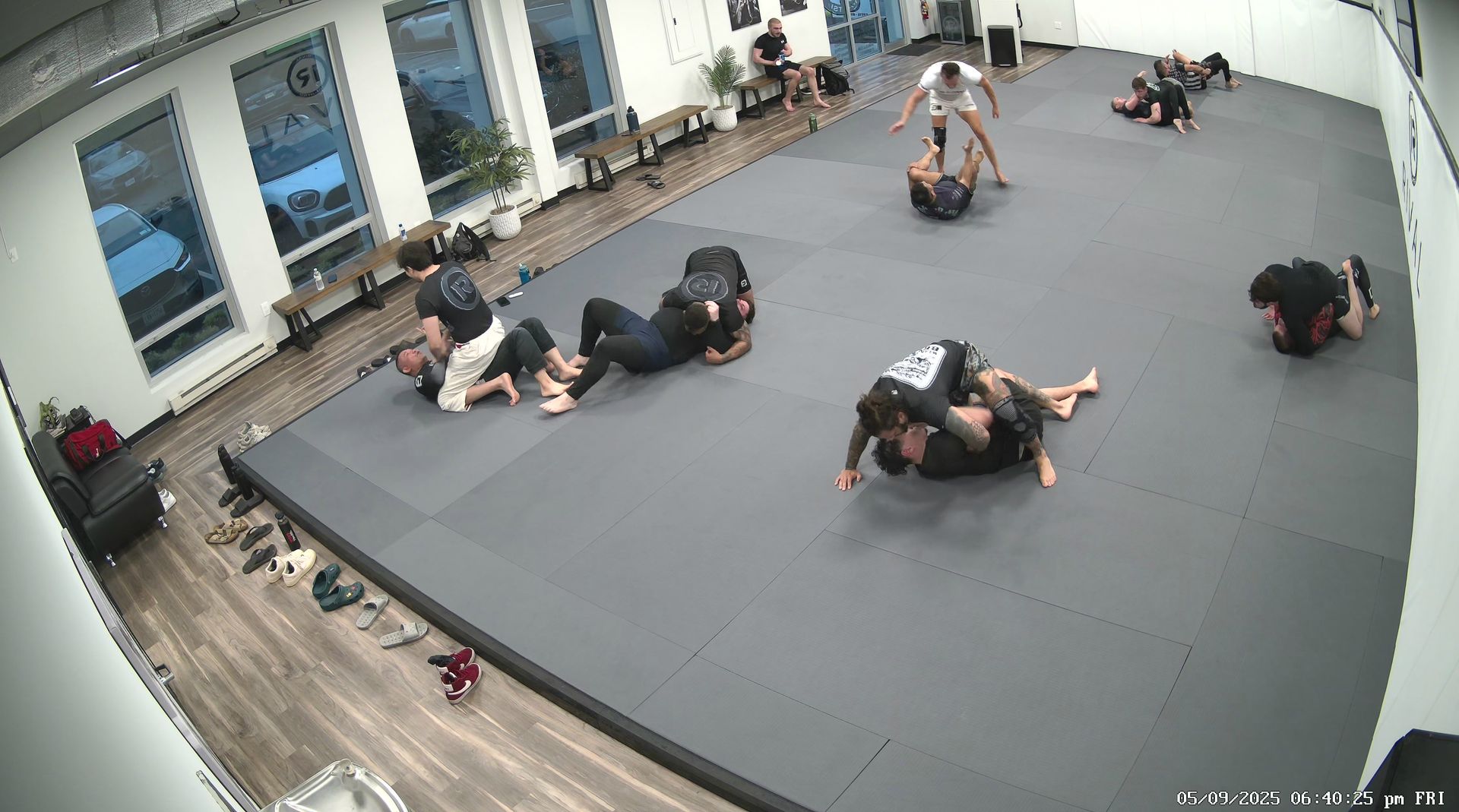
Walking into the training space at Rival Jiu-Jitsu, you notice the controlled chaos of bodies moving across the mats. There's this focused energy that's different from a typical gym, where the sound of weights clanking mingles with quiet instruction and the soft thud of bodies hitting mats.
The cardiovascular conditioning that comes from rolling sessions is intense in a way that's hard to describe. It's not the steady burn of running or cycling, but this interval-style intensity that mirrors the demands of most competitive sports. Your heart rate spikes during scrambles, then settles during more technical exchanges, creating the kind of conditioning pattern that translates beautifully to game situations.
Athletes training at Rival Jiu-Jitsu often mention how their flexibility improved without them really trying. The range of motion required for various positions and escapes naturally stretches your hips, shoulders, and spine in ways that complement other sports perfectly. A basketball player told me recently how his shooting improved because his shoulder flexibility increased, though he hadn't made that connection until his coach pointed it out.
Mental Benefits That Extend Beyond the Mats
Something shifts in your mindset when you start training Brazilian Jiu-Jitsu regularly. Maybe it's the problem-solving aspect, where every roll becomes this chess match of positioning and timing. Or perhaps it's the humbling nature of the art, where even accomplished athletes find themselves getting submitted by practitioners half their size.
The mental resilience that develops through consistent training at Rival Jiu-Jitsu becomes apparent in other areas of athletic performance. When you're comfortable being uncomfortable on the mats, when you've learned to stay calm while someone's trying to choke you, the pressure moments in your primary sport feel more manageable somehow.
I think about the confidence that builds gradually through this training. Not the flashy, aggressive confidence you might associate with martial arts movies, but this quiet self-assurance that comes from knowing you can handle yourself in challenging situations. Athletes carry this into their other sports, into their daily lives.
How Different Sports Benefit
Football and lacrosse players often gravitate toward Jiu-Jitsu Waldwick training because of how it develops explosive power and body control. The scrambles that happen on the mats mirror the chaos of contact sports, teaching athletes to maintain composure while generating power from compromised positions.
Soccer players discover benefits they didn't expect. The spatial awareness that comes from constantly monitoring an opponent's position and weight distribution translates into better field vision. The core stability required for maintaining guard or executing sweeps shows up as improved ball control and shooting accuracy.
Wrestling athletes find that Brazilian Jiu-Jitsu adds dimensions to their grappling that they might not have considered. While wrestling emphasizes takedowns and top control, the ground game focus at Rival Jiu-Jitsu expands their skill set in ways that make them more complete grapplers overall.
The Recovery and Injury Prevention Angle
Here's something that took me by surprise when I first learned about cross-training benefits: how Jiu-Jitsu serves as active recovery for athletes. Instead of just resting or doing light cardio on off days, training at Rival Jiu-Jitsu provides movement patterns that help your primary sport muscles recover while still maintaining fitness.
The injury prevention aspect is significant too. By training movement patterns that your primary sport doesn't require, you develop more balanced strength and flexibility. This reduces the overuse injuries that plague single-sport athletes who repeatedly stress the same muscle groups and joints.
The diverse range of motion required in Brazilian Jiu-Jitsu helps identify and address muscle imbalances before they become problematic. Athletes often discover tight areas or weak spots they didn't know they had, allowing them to address these issues proactively.
The Community and Culture Factor
There's something special about the atmosphere at Rival Jiu-Jitsu that supports athletic development beyond just the physical training. The culture of mutual respect and continuous learning creates an environment where athletes feel comfortable pushing their boundaries and making mistakes.
The teaching methodology emphasizes technique over athleticism, which means athletes learn to move efficiently rather than relying solely on their natural physical gifts. This technical foundation enhances performance in other sports where refined movement patterns provide competitive advantages.
Training partners come from all athletic backgrounds, creating this cross-pollination of movement ideas and training philosophies. A wrestler might show a takedown variation, while a soccer player demonstrates footwork patterns that work in scrambles.
Integrating Jiu-Jitsu Into Your Training
The beauty of adding Brazilian Jiu-Jitsu to your athletic routine is how it complements rather than competes with your primary sport training. Sessions at Rival Jiu-Jitsu can fit around your main sport schedule, serving as supplemental conditioning that addresses areas your primary sport might not fully develop.
Most athletes find that two to three sessions per week provide substantial benefits without overwhelming their recovery capacity. The key is viewing Jiu-Jitsu as part of your overall athletic development rather than a separate activity competing for your time and energy.
The learning curve is gradual enough that you can start slowly and build intensity as your understanding develops. Unlike some cross-training activities that might interfere with sport-specific skills, the movement patterns and conditioning from Jiu-Jitsu tend to enhance rather than detract from other athletic abilities.
Brazilian Jiu-Jitsu offers something that traditional cross-training methods often miss: the combination of physical conditioning, mental challenge, and technical skill development all wrapped into engaging training sessions that feel more like solving puzzles than just working out.
For athletes in Waldwick looking to gain that competitive edge, the question isn't really whether Jiu-Jitsu can help improve performance. The evidence from practitioners at Rival Jiu-Jitsu speaks for itself. The real question is whether you're ready to explore what this training might unlock in your athletic journey.
---
If you're curious about experiencing Brazilian Jiu-Jitsu firsthand, you might find it worthwhile to visit Rival Jiu-Jitsu's website to learn about trial classes and see if this training style resonates with your athletic goals.
The gentle introduction they offer helps athletes from all backgrounds feel comfortable exploring this new movement practice.
For those ready to take the next step,
scheduling a visit to see the training environment in person often provides the clarity needed to make an informed decision about adding this element to your athletic development.